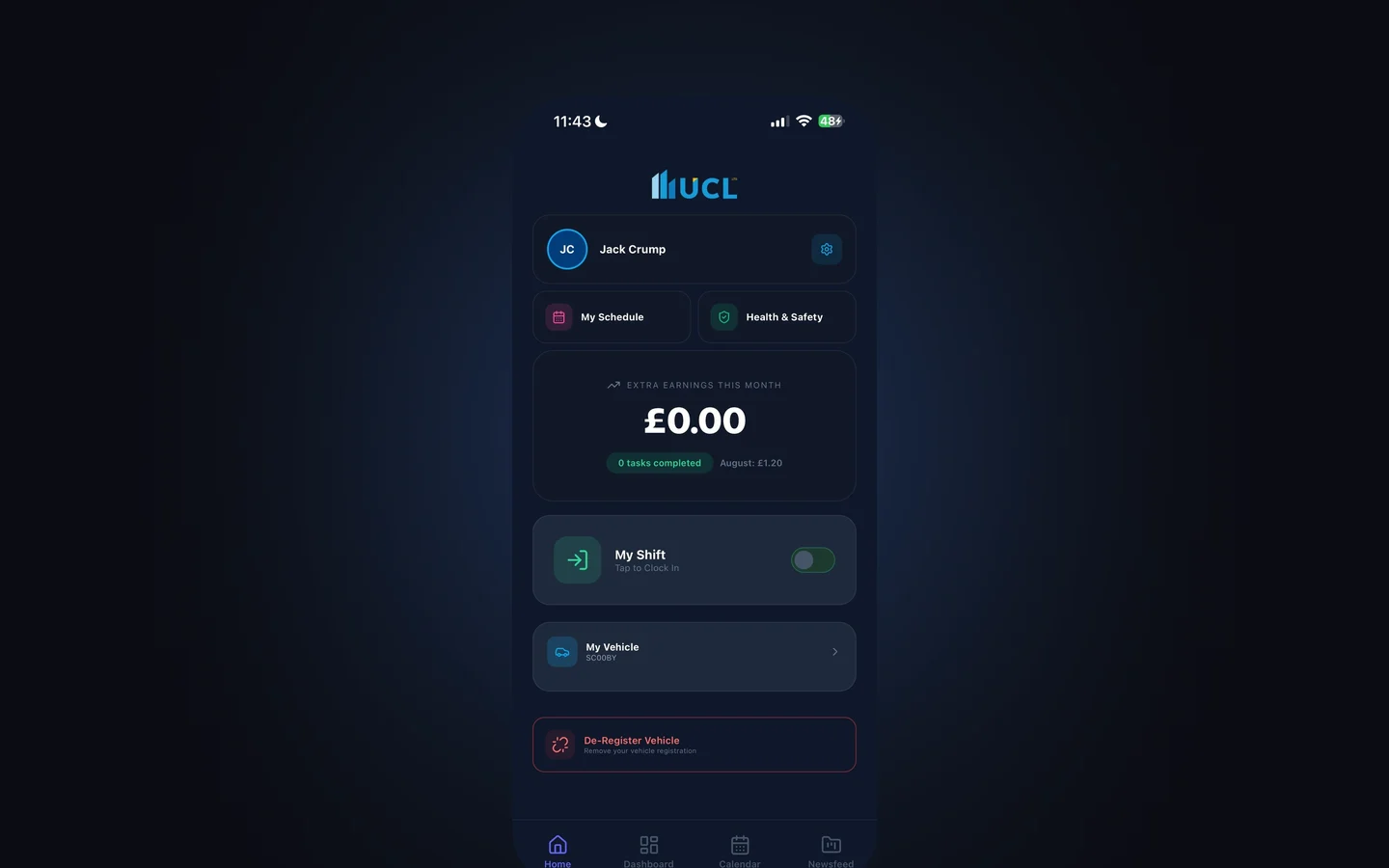
Where they were
UCL run crews and vans across live sites every day. The admin behind that lived in spreadsheets, group chats and paper. Vehicle checks were photos on a phone. Timesheets were a Friday afternoon job for someone in the office. Nobody could say where a van was without ringing the driver.
They had tried an off the shelf app. It did one thing and charged for five. They wanted something built around how they actually work.
What we built
An iOS app for the crew and a back office for the people running the business, both talking to one system.
Sign in that is actually secure. A crew calendar so everyone knows where they are on Monday. Vehicle inspections with photo evidence, submitted from the cab and stored properly. A live fleet map with every van, moving, parked or gone quiet, plus the journey history for each one. Timesheets and earnings that build themselves from the day, so the driver sees what they have made and the office sees the same number. A newsfeed for site updates and photos. And a back office with the whole picture: staff, vehicles, journeys, schedules, all exportable in one click when the accountant asks.
Rosters upload from the spreadsheet they already keep, so nobody had to change how they plan the week.
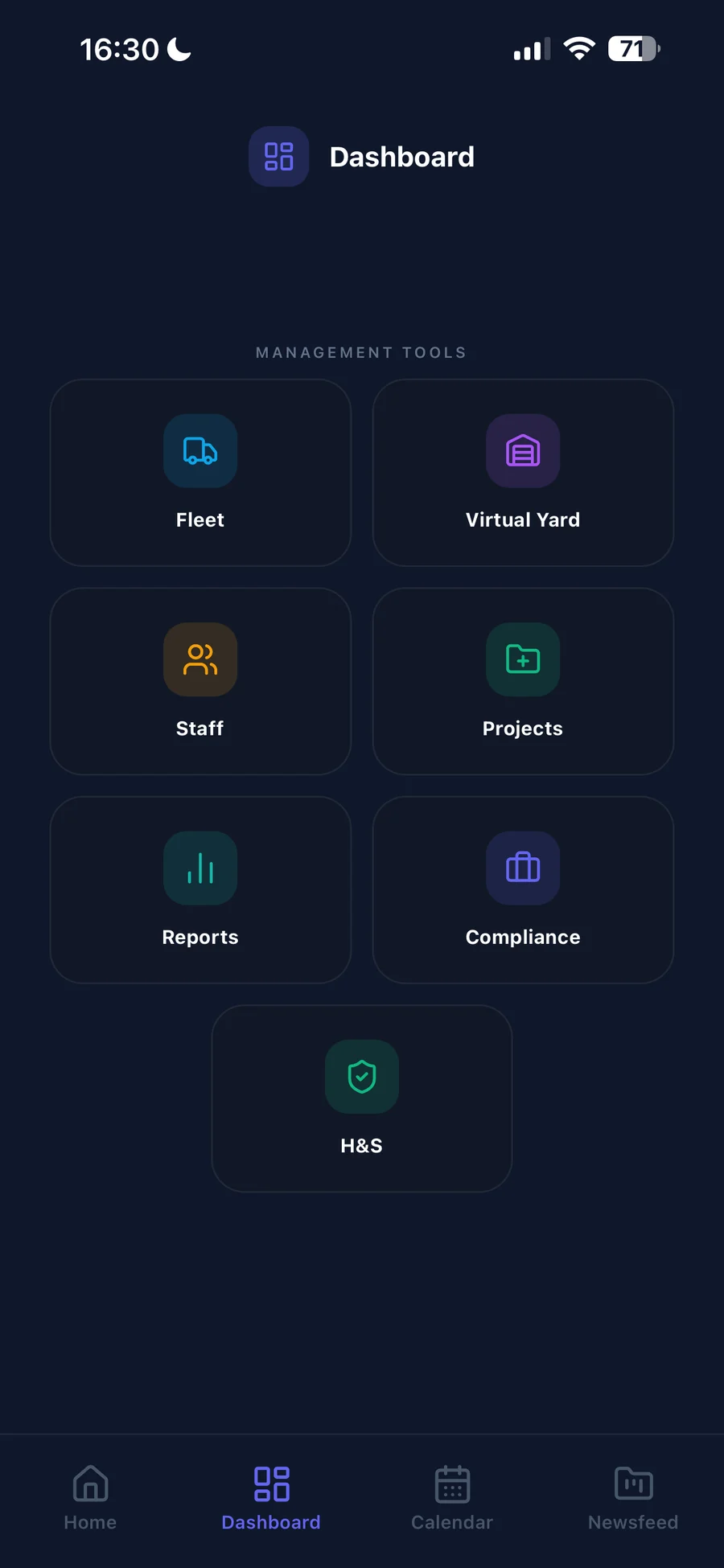
The manager dashboard
The hard bits
Tracking a van for a ten hour shift without flattening the phone is a real engineering problem. We built adaptive tracking that backs off when the vehicle is parked and wakes up when it moves, and it keeps going if the app is force quit.
Every screen was tested by people who use their phones with gloves on. When something broke in the field we fixed it the same day, usually before the crew clocked off.
What it saved them
One system instead of a stack of subscriptions, which alone paid for the build. The Friday timesheet job disappeared. Vehicle checks stopped being lost. The office got hours back every week that used to go on chasing, checking and retyping. And the business finally has its own data, in one place, that it can grow on.